
Planning a wildlife safari in Sri Lanka? Udawalawe and Yala National Parks are the country's premier destinations for unforgettable wildlife encounters. This comprehensive guide covers everything you need to know about visiting these magnificent parks in 2026, including current entrance fees, best times to visit, wildlife spotting tips, and how to book the perfect private safari experience with Udawalawa.com.
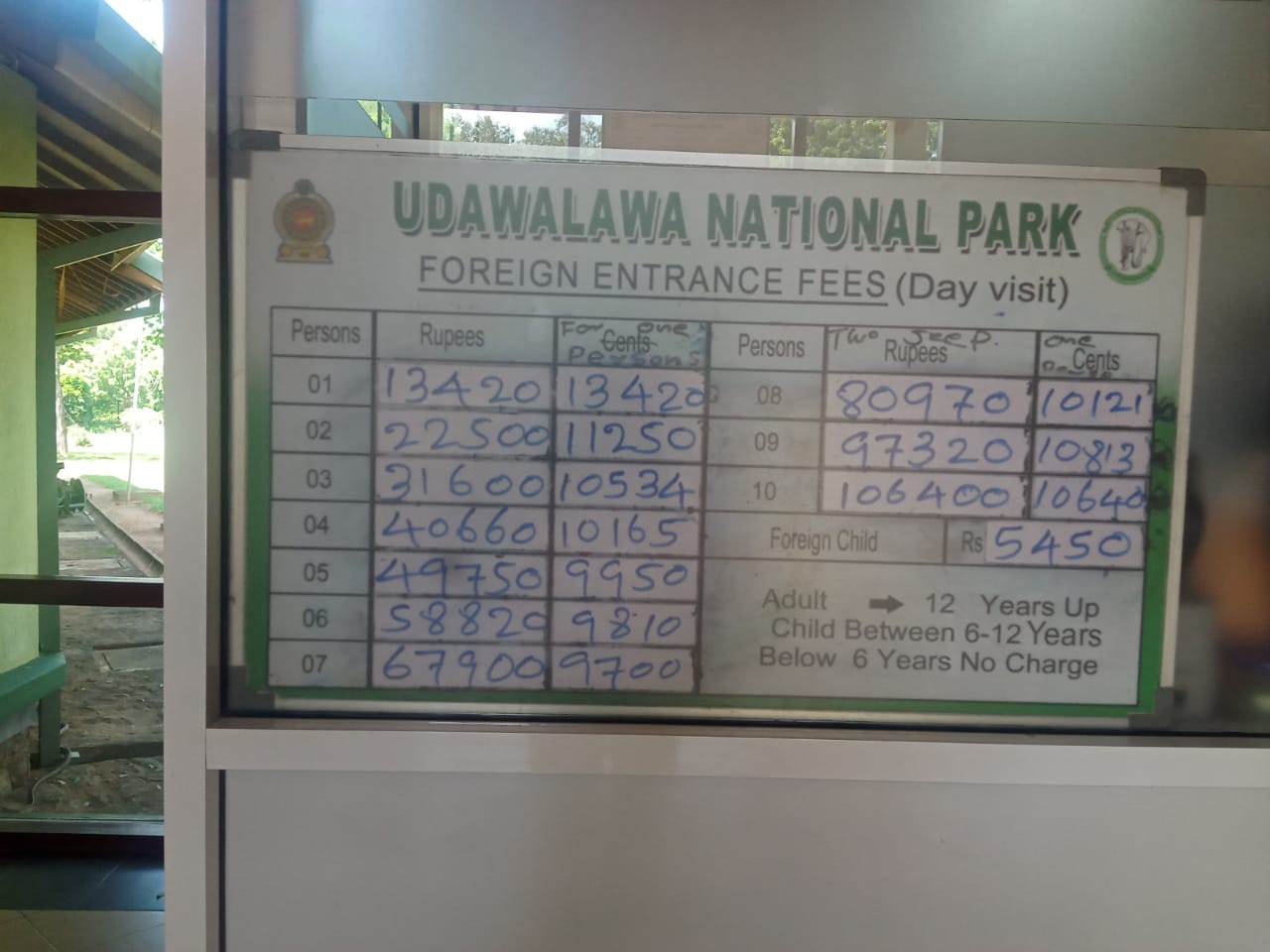
🎫 Udawalawe National Park Entrance Fees 2026
Official Foreign Visitor Ticket Prices (Day Visit)
| Number of Persons | Total Cost (Rs) | Cost Per Person (Rs) | Approx. USD* |
|---|---|---|---|
| 1 Person | Rs 13,420 | Rs 13,420 | ~$45 |
| 2 Persons | Rs 22,500 | Rs 11,250 | ~$75 |
| 3 Persons | Rs 21,600 | Rs 10,534 | ~$72 |
| 4 Persons | Rs 40,660 | Rs 10,165 | ~$135 |
| 5 Persons | Rs 49,750 | Rs 9,950 | ~$165 |
| 6 Persons | Rs 58,820 | Rs 9,810 | ~$195 |
| 7 Persons | Rs 67,900 | Rs 9,700 | ~$225 |
| 8 Persons (2 Jeeps) | Rs 80,970 | Rs 10,121 | ~$270 |
| 9 Persons (2 Jeeps) | Rs 97,320 | Rs 10,813 | ~$325 |
| 10 Persons (2 Jeeps) | Rs 106,400 | Rs 10,640 | ~$355 |
- Foreign Child (6-12 years): Rs 5,450
- Children under 6 years: FREE entry
- Adult definition: 12 years and above
- *USD prices approximate based on current exchange rates
- Prices include park entrance and service charges
- Groups of 8+ require two safari jeeps
🦁 Book Your All-Inclusive Safari Package
Skip the hassle! Our packages include hotel pickup, private 4WD jeep, park tickets, and expert naturalist guide.
Book Safari from $50 →About Udawalawe National Park
Udawalawe National Park, established on June 30, 1972, is one of Sri Lanka's most popular wildlife destinations, covering 308.21 square kilometres on the boundary of Sabaragamuwa and Uva Provinces. The park was created to provide sanctuary for wild animals displaced by the construction of the Udawalawe Reservoir on the Walawe River.
Located just 165 kilometres from Colombo, Udawalawe is the third-most visited national park in Sri Lanka, attracting over 188,388 visitors in 2023 alone. The park is internationally renowned for its large population of Sri Lankan elephants, making it one of the best places in Asia to observe wild elephants in their natural habitat.
📍 Location
Sabaragamuwa & Uva Provinces, 165 km from Colombo
📐 Park Size
308.21 km² (119 sq mi) of protected wilderness
🗓️ Established
June 30, 1972 - Over 50 years of conservation
🌡️ Climate
27-28°C average, 1,500mm annual rainfall
Wildlife at Udawalawe
Udawalawe is a biodiversity hotspot with an impressive array of wildlife species recorded within the park:
250+ Elephants
Permanently resident wild elephants
Sri Lankan Leopard
Rare but present in the park
43 Mammal Species
Including sambar deer, axis deer
184 Bird Species
33 migratory species included
Mugger Crocodiles
Found in the reservoir waters
33 Reptile Species
Including water monitors
The park's open grasslands and wetland habitats make wildlife spotting easier compared to denser forest parks. The Udawalawe Reservoir, created by the dam, attracts large herds of elephants, especially during the dry season when water becomes scarce elsewhere.
Udawalawe Elephant Transit Home
Adjacent to the park, the Udawalawe Elephant Transit Home was established in 1995 to care for orphaned elephant calves. Unlike elephant orphanages that keep elephants permanently, this facility rehabilitates and releases young elephants back into the wild once they can fend for themselves. Between 1998 and 2002, 17 elephant calves were successfully released into the national park.
About Yala National Park
Yala National Park, Sri Lanka's most famous wildlife reserve, covers 979 km² (378 sq mi) bordering the Indian Ocean in the country's southeast. First designated as a wildlife sanctuary in 1900 and upgraded to national park status in 1938, Yala is renowned for having the highest leopard density in the world.
📍 Location
Southern & Uva Provinces, 270 km from Colombo
📐 Park Size
979 km² (378 sq mi) - 5 blocks
🗓️ Established
1900 (Sanctuary), 1938 (National Park)
Highest density in the world
Wildlife at Yala
Yala hosts diverse ecosystems including moist monsoon forests, dry forests, grasslands, and marine wetlands, supporting an incredible variety of wildlife:
- 44 mammal species including Sri Lankan elephant, leopard, sloth bear, and wild water buffalo
- 215 bird species with 7 endemic to Sri Lanka (recognized as an Important Bird Area)
- 47 reptile species including 6 endemics and 5 endangered sea turtle species
- 18 amphibian species and 21 freshwater fish species
- Numerous invertebrates including butterflies like the Common Mormon and Crimson Rose
Endemic bird species at Yala include the Sri Lanka grey hornbill, Sri Lanka junglefowl (national bird), Sri Lanka wood pigeon, and the crimson-fronted barbet. The park's lagoons attract thousands of migratory waterfowl during the northeast monsoon.
Historical & Cultural Significance
Beyond wildlife, Yala holds significant cultural importance. The area was home to ancient civilizations, with archaeological evidence dating back to the 5th century BC. Two important Buddhist pilgrimage sites—Sithulpahuwa (once home to 12,000 arahants) and Magul Vihara (built in 87 BC)—are located within the park, attracting 400,000 pilgrims annually.
Best Time to Visit
Udawalawe National Park
Udawalawe is unique among Sri Lankan national parks as it offers excellent wildlife viewing year-round. The park's resident elephant population and diverse habitats ensure consistent sightings regardless of season.
- Dry Season (May-September): Best for elephant gatherings around water sources
- January-April: Excellent visibility and pleasant weather
- October-January: Northeast monsoon brings rain, but elephants remain visible
- March-May: Second rainy period, lush vegetation
Yala National Park
Yala has distinct seasons affecting wildlife visibility:
- February-July: Peak season with best leopard sightings
- August: Good but warmer conditions
- September-October: Park typically CLOSED for annual maintenance
- November-January: Post-monsoon with lush vegetation, good bird watching
📅 Ready to Experience Sri Lanka's Wildlife?
Book your private safari today and let our expert guides show you the best of Udawalawe and Yala!
Check Availability →Expert Safari Tips
What to Bring
- Binoculars for distant wildlife spotting
- Camera with zoom lens (200mm+ recommended)
- Sunscreen, hat, and sunglasses
- Light, neutral-colored clothing
- Insect repellent
- Plenty of water and snacks
- Valid passport or ID for park entry
Safari Timing
- Morning Safari (5:30 AM - 10:00 AM): Best for active wildlife and cooler temperatures
- Evening Safari (3:00 PM - 6:30 PM): Golden light for photography, animals coming to water
- Full Day Safari: Maximum wildlife encounters with lunch break
Photography Tips
- Arrive early for the best light conditions
- Keep camera ready—wildlife appears suddenly
- Use continuous shooting mode for action shots
- Respect wildlife distances—never provoke animals
- The reservoir edges offer excellent reflection shots
Why Book with Udawalawa.com?
At Udawalawa.com, we've been organizing private safari tours since 2015, earning excellent reviews on TripAdvisor. Here's why thousands of travelers trust us:
✅ All-Inclusive Packages
Hotel pickup, private 4WD jeep, park tickets, and expert guide included
🏆 Expert Naturalist Guides
Local guides with deep wildlife knowledge and tracking skills
💰 Best Price Guarantee
Competitive pricing from just $50 per person
4.8/5 rating on TripAdvisor with 150+ reviews
❓ Frequently Asked Questions
🐘 Udawalawe National Park FAQs
The entrance fee for foreign adults at Udawalawe National Park in 2026 is Rs 13,420 per person. Group rates offer better value: 2 persons Rs 22,500 total, 3 persons Rs 21,600, up to 7 persons Rs 67,900 (best per-person rate at Rs 9,700). Foreign children (6-12 years) pay Rs 5,450, and children under 6 enter free.
Udawalawe National Park is open daily from 6:00 AM to 6:00 PM. The best times for safari are early morning (6:00 AM - 10:00 AM) and late afternoon (3:00 PM - 6:00 PM) when wildlife is most active.
Udawalawe National Park has approximately 250 permanently resident wild elephants, making it one of Sri Lanka's best places for elephant sightings. During a single safari, you can typically spot 50-100 elephants, especially during the dry season when they gather near water sources.
Yes! Unlike Yala, Udawalawe National Park is open year-round and doesn't close for annual maintenance. The park offers excellent wildlife viewing in all seasons, though the dry season (May-September) is particularly good for elephant sightings.
Udawalawe National Park is located 165 kilometers (103 miles) from Colombo. The drive takes approximately 4-5 hours via the Southern Expressway and regular roads. Udawalawa.com offers convenient pickup from any location in Sri Lanka.
Udawalawe is excellent year-round due to its resident elephant population. The best times are the dry seasons from May to September and January to April when elephants gather near water sources. Early morning (6:00-10:00 AM) and late afternoon (3:00-6:00 PM) offer the best wildlife activity.
Beyond elephants, Udawalawe is home to 43 mammal species including Sri Lankan leopard, sloth bear, water buffalo, sambar deer, spotted deer, and wild boar. The park also has 184 bird species, 33 reptile species including mugger crocodiles and water monitors, and 135 butterfly species.
A typical morning or evening safari lasts 3-4 hours. Full-day safaris run 6-8 hours with a break. We recommend at least a half-day safari to maximize wildlife encounters. Most visitors see elephants within the first 30 minutes of entering the park.
Yes, Sri Lankan leopards are present at Udawalawe, but sightings are rare compared to Yala. The leopards tend to stay in the forested areas and are elusive. If leopards are your priority, we recommend combining Udawalawe with a Yala safari.
The Udawalawe Elephant Transit Home, established in 1995, is a rehabilitation center for orphaned elephant calves. Unlike permanent orphanages, it prepares elephants for release back into the wild. You can visit to see feeding times (9:00 AM, 12:00 PM, 3:00 PM, 6:00 PM).
Absolutely! Udawalawe is one of the best parks for families with children. The almost-guaranteed elephant sightings keep kids engaged, and children under 6 enter free. The open terrain means wildlife is easier to spot than in dense jungle parks.
We strongly recommend booking in advance, especially during peak season (December-April). Advance booking ensures you get a quality jeep, experienced guide, and hotel pickup. Book with Udawalawa.com at least 24-48 hours ahead for the best experience.
Wear light, comfortable, neutral-colored clothing (khaki, beige, green). Avoid bright colors that might disturb wildlife. Bring a hat, sunglasses, and closed-toe shoes. Pack a light jacket for early morning safaris as it can be cool.
Yes, Udawalawa.com exclusively offers private 4WD jeep safaris. You won't be grouped with strangers. Each jeep accommodates up to 6-7 passengers comfortably. For larger groups, we arrange multiple jeeps with coordinated guides.
Mobile signal is patchy inside the park. Most Sri Lankan networks (Dialog, Mobitel) have coverage at the entrance and some areas, but expect dead zones in remote sections. Our guides carry communication equipment for emergencies.
🐆 Yala National Park FAQs
Yala National Park entrance fees for foreign adults in 2026 range from Rs 15,000-18,000 per person depending on the block visited. Block 1 (most popular for leopards) has the highest fees. Children 6-12 pay reduced rates, and under 6 enter free. Exact prices vary; contact us for current rates.
Yala has the highest leopard density in the world. Block 1 alone had approximately 25 individual leopards recorded in a 1982 survey, and the population has grown since. The open terrain and abundant prey make leopard sightings more frequent here than anywhere else globally.
Yala National Park typically closes during September and October for annual maintenance and to give wildlife a break from tourism. Some blocks may have different closure periods. Always check current status before planning your visit. Udawalawe remains open year-round as an alternative.
The best time for leopard sightings at Yala is February to July during the dry season when leopards frequent water holes. Early morning safaris (5:30-10:00 AM) offer the best chances as leopards are most active before the midday heat.
Yala National Park is approximately 270 kilometers from Colombo. The shortest route via Ratnapura and Tissamaharama takes about 5-6 hours. Many visitors base themselves in Tissamaharama or Kirinda for easier access to the park.
Yala hosts 44 mammal species including Sri Lankan elephants, sloth bears, wild water buffalo, spotted deer, and sambar. The park has 215 bird species (7 endemic), 47 reptile species, and all 5 endangered sea turtle species visit its beaches. You may also see crocodiles, jackals, and mongoose.
Yala National Park has 5 blocks. Block 1 (14,101 hectares, added 1938) is most popular and has the highest leopard density. Block 2-5 were added between 1954-1973. Not all blocks are open to tourists; Block 1 is the primary tourist area with the best infrastructure.
Yes, Sri Lankan sloth bears inhabit Yala, though they're shy and sightings are less common than leopards. The best time to spot sloth bears is during the Palu fruit season (June-July) when they come out to feed on fallen fruit.
Both parks offer unique experiences. Yala is better for leopard sightings (highest density in the world), while Udawalawe is better for elephants (250+ resident). Udawalawe is less crowded, open year-round, and closer to Colombo. Ideally, visit both for a complete Sri Lankan wildlife experience.
Yes, Yala contains significant Buddhist sites including Sithulpahuwa (once home to 12,000 arahants) and Magul Vihara (built 87 BC). These attract 400,000 pilgrims annually. The area has archaeological evidence of civilizations dating back to the 5th century BC.
Yes, Yala was in the direct path of the 2004 Indian Ocean tsunami. Approximately 250 people died in the park vicinity, and about 5,000 hectares of habitat were affected. Remarkably, wildlife largely survived—studies showed elephants may have sensed the tsunami and moved to higher ground.
Yala has 7 endemic bird species: Sri Lanka grey hornbill, Sri Lanka junglefowl (national bird), Sri Lanka wood pigeon, crimson-fronted barbet, black-capped bulbul, blue-tailed bee-eater, and brown-capped babbler. The park is recognized as an Important Bird Area.
All five globally endangered sea turtle species (leatherback, green, olive ridley, hawksbill, and loggerhead) visit Yala's coastline. The beach at Patanangala is a nesting site. However, turtle sightings require coastal area visits and timing with nesting seasons.
Yala Block 1 can be crowded during peak season (December-April), especially at popular leopard spots. For a less crowded experience, visit during shoulder seasons or consider Udawalawe, which has fewer visitors. Our guides know quieter routes and timing strategies.
Yala features diverse ecosystems: moist monsoon forests, dry monsoon forests, semi-deciduous forests, thorn forests, grasslands, freshwater marshes, marine wetlands, mangroves, lagoons, and sandy beaches. This variety supports the park's incredible biodiversity.
🚙 General Safari & Booking FAQs
Our all-inclusive packages include: hotel/airport pickup and drop-off, private 4WD safari jeep, all park entrance tickets, experienced English-speaking naturalist guide, bottled water, and service charges. Lunch can be arranged for full-day safaris.
Booking is easy! Visit our homepage at udawalawa.com, enter your pickup location, date, and number of travelers to get an instant quote. You can also WhatsApp us at +94 77 083 3772 for personalized assistance. We accept online payments and cash.
There's no minimum age for safari. Children under 6 enter national parks free. However, very young children (under 2) may find the bumpy jeep ride tiring. We recommend safaris for children 4 years and older for the best experience.
Yes! Udawalawa.com accepts payments in USD, EUR, GBP, and Sri Lankan Rupees. We also accept credit cards, PayPal, and bank transfers. Cash payment at pickup is also available.
Our jeeps have canvas covers for rain protection. Light rain often brings out wildlife! If heavy rain makes the safari unsafe, we'll reschedule at no extra cost. Sri Lanka's rain is usually brief tropical showers that pass quickly.
Safari involves bumpy roads and can be uncomfortable for pregnant women, especially in later stages. We recommend consulting your doctor before booking. If you proceed, inform us so we can arrange extra cushions and choose smoother routes.
Visiting both parks in one day is not recommended due to the 2-hour drive between them. We suggest either a 2-day tour or choosing one park. For the ultimate experience, our 2-day Udawalawe + Yala combo includes accommodation and both safaris.
Our primary guides speak English and Sinhala. We can arrange guides who speak German, French, or other languages with advance notice. Please mention your language preference when booking.
Wildlife sightings are never 100% guaranteed, but Udawalawe has a near-perfect record for elephant sightings. In the rare event of no wildlife, we'll offer a discounted return safari. Our experienced guides maximize your chances with expert tracking skills.
Yes, you can bring snacks and water. However, eating is only allowed inside the vehicle, and all trash must be taken with you. Feeding wildlife is strictly prohibited. We provide bottled water; full-day safaris can include packed lunch.
Basic toilet facilities are available at park entrances and some designated rest areas inside. We recommend using facilities before entering. For longer safaris, guides know the location of all rest stops.
Safari jeeps are not wheelchair accessible, but we can accommodate guests with mobility challenges. Please contact us in advance to discuss your needs. We've successfully arranged safaris for guests with various abilities.
Free cancellation up to 48 hours before safari date. Cancellations within 48 hours receive 50% refund. No-shows are non-refundable. We offer free rescheduling for weather-related cancellations.
Yes! If you've had a great experience with one of our guides, let us know and we'll try to assign them for your return visit. Subject to availability and advance notice.
Yes! We partner with quality hotels near both parks at various price points. Options range from budget guesthouses to luxury safari lodges. Contact us for personalized accommodation recommendations.
📸 Wildlife Photography FAQs
A DSLR or mirrorless camera with a zoom lens (200mm minimum, 400mm+ ideal) works best. Bring extra batteries and memory cards. A monopod or beanbag helps stabilize shots in moving vehicles. Smartphones can capture memories but struggle with distant wildlife.
The golden hours—first 2 hours after sunrise and last 2 hours before sunset—offer the best light. Early morning also brings misty atmospheres perfect for moody shots. Midday sun creates harsh shadows; consider focusing on behavior shots then.
Absolutely! Udawalawa.com offers specialized photography safaris with extended time at sighting locations, photography-friendly positioning, and guides who understand photographer needs. Contact us for custom photography tour packages.
No, drones are strictly prohibited in all Sri Lankan national parks. They disturb wildlife and are dangerous to birds. Violation can result in confiscation and fines. Ground-level photography only.
Safe distances are maintained for both wildlife and visitor protection. Our guides know how to position for great shots while respecting animals. Elephants often approach jeeps curiously—sometimes within 10-20 meters! Never provoke or feed animals.
🌿 Conservation & Environment FAQs
Park entrance fees directly fund the Department of Wildlife Conservation's protection efforts. Tourism creates economic incentive for conservation and local employment. Udawalawa.com also supports local communities and practices responsible tourism.
Both parks face threats including poaching, illegal logging, encroachment by agriculture, gem mining, and invasive plant species like Lantana camara. Climate change affecting water sources and human-elephant conflict at park boundaries are ongoing concerns.
Keep voices low, don't stand up in the jeep, never litter, don't feed or provoke wildlife, stay in the vehicle at all times, follow guide instructions, and choose operators like Udawalawa.com who practice ethical tourism and support local communities.
All elephants in Udawalawe National Park are completely wild. The park was created specifically to protect these free-roaming herds. The Elephant Transit Home nearby rehabilitates orphans for release—they're not tourist attractions like some elephant parks.
The Department of Wildlife Conservation limits vehicle numbers, enforces anti-poaching patrols, maintains leopard corridors, and conducts population monitoring. Tourism revenue funds these efforts. Researchers continue studying leopard behavior to improve conservation strategies.
✈️ Practical Travel FAQs
Most nationalities need an Electronic Travel Authorization (ETA) before arrival. Apply online at eta.gov.lk. Tourist visas are typically valid for 30 days and can be extended. Check current requirements as policies change.
No vaccinations are mandatory for Sri Lanka, but Hepatitis A, Typhoid, and Tetanus are recommended. Malaria risk is minimal in tourist areas but bring insect repellent. Consult your doctor 4-6 weeks before travel for personalized advice.
Stick to bottled water, which is widely available and inexpensive. Our safari packages include bottled water. Avoid ice in drinks unless at reputable hotels. This precaution prevents potential stomach issues during your trip.
Sri Lankan Rupee (LKR) is the local currency. USD, EUR, and GBP are widely accepted for tourist services. ATMs are available in major towns. We accept multiple currencies and credit cards for safari bookings.
From Colombo Bandaranaike Airport, the drive to Udawalawe takes 5-6 hours. Udawalawa.com offers airport pickup as part of our packages—we'll collect you and drive directly to your safari. Alternatively, take the Southern Expressway to Hambantota, then inland roads.
🐘 Start Your Safari Adventure Today!
Experience the magic of Sri Lanka's wildlife with Udawalawa.com. Private jeeps, expert guides, best prices guaranteed.
Book Your Safari Now →